01
Polyglot Data Modeling
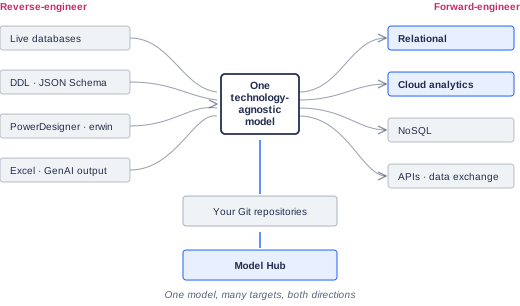
Define meaning once in a technology-agnostic model, then derive physical schemas for 45+ targets. From Oracle and Databricks to MongoDB, OpenAPI, and Avro. A unified approach for data-at-rest and data-in-motion.

Enterprise-grade unified platform for data modeling across relational databases, cloud analytics,
NoSQL databases, APIs, data exchanges, and event streams.
Turn your data models into a semantic foundation for trusted data across business, IT, and AI.
Manage metadata as code with Git-based collaboration, plus sovereignty for your metadata and AI exchanges.
Free to start · No registration · No download · Your models never leave your machine
















Many organizations struggle to gather the semantics for all their data. Schemas are scattered across dozens of databases, pipelines, and APIs, each maintained by different teams. Documentation drifts from reality. Business and IT use the same words for different things, and different words for the same things.
So nobody can say with confidence what a number in a report actually represents. The risk when pointing AI at structures that nobody designed or explained is to make erroneous decisions based on those ambiguities.
An ERD makes it easy for humans to understand structure. Systems do not read pictures. They instead consume schema contracts such as SQL DDLs, JSON Schema, Avro, Parquet, Protobuf, OpenAPI, GraphQL, etc.
Meaning breaks at the seams between systems. Between relational and NoSQL databases, object storage, cloud analytics platforms, lakehouses, APIs, and streams, each keeps its own version. So a change agreed in one place may never reach the others.
An inventory tells you what your data looks like today, including whatever is already wrong with it. Nothing records what it was meant to look like, or how it should evolve. So the catalog becomes one more metadata silo rather than the place where semantic meaning is reconciled and shared.
Don't create another inventory of what already exists. Instead, design the semantic meaning of data, keep that design alive, and make it available to everyone and every system that consumes your data. Make your data models first-class, versioned artifacts.
Forward-engineer data models into the artifacts that systems can consume, or discover existing data
through reverse-engineering. Share the semantics of your data with all stakeholders.
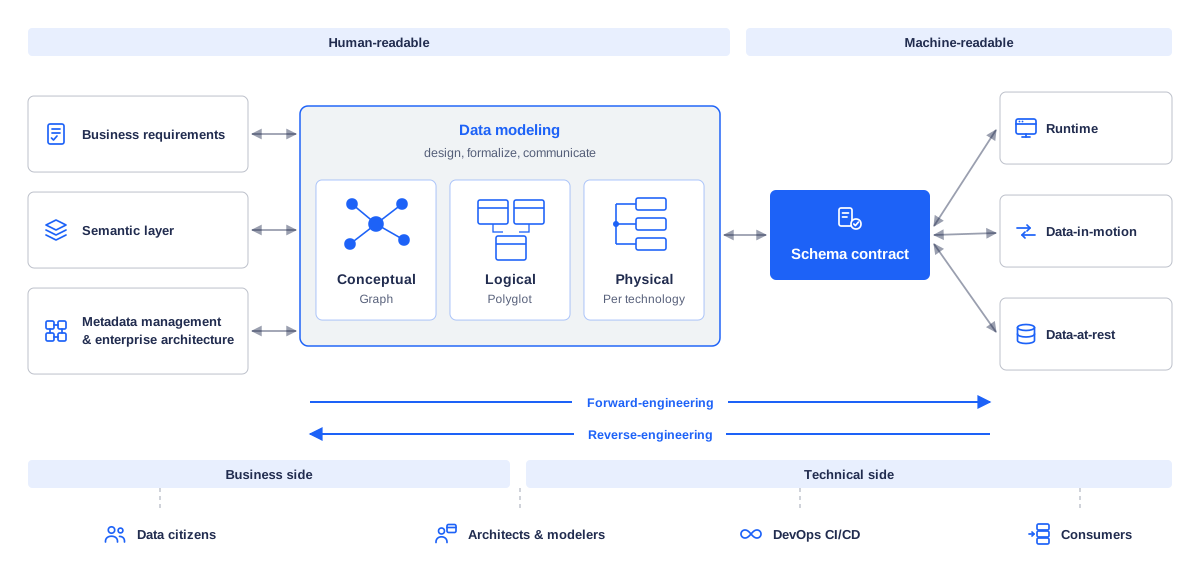
A single end-to-end solution: design and evolve data models in Hackolade Studio (in your browser or on your desktop), version them in your Git repository, and share them with the whole organization through the Hackolade Model Hub.
ER diagram data modeling for 45+ targets. Design conceptual, logical, and physical data models; reverse-engineer existing databases, files, legacy data models; forward-engineer DDL, schemas, validators, and documentation, or publish to metadata management suites; leverage AI-assisted data modeling. Run it in your browser with nothing to install, or download the desktop application. Either way, your data models stay local or in your Git repositories, never on Hackolade servers.
Promote a shared meaning for your data. The Model Hub gives the whole organization central, searchable access to the semantic meaning of your data; business analysts, data stewards, and engineers can all agree on how to interpret the data. An MCP server running strictly inside your infrastructure extends that same understanding to only your authorized users and AI agents.
Define meaning once in a technology-agnostic model, then derive physical schemas for 45+ targets. From Oracle and Databricks to MongoDB, OpenAPI, and Avro. A unified approach for data-at-rest and data-in-motion.
All three levels of data modeling are connected but modular: business-friendly graph view for concepts, entity-relationship diagrams for logic, and per-target physical data models, plus a tabular grid view for business users.
Create data models from live databases, DDLs, JSON and JSON Schema, Excel, PowerDesigner, erwin and ER/Studio exports, even GenAI output in xDBML or Mermaid. Your existing assets become governed data models in a few minutes.
Generate the artifacts your platforms can execute: DDLs for relational and analytics targets, MongoDB validators, CQL, JSON Schema, Avro, Parquet, Protobuf, OpenAPI specs, plus Excel, dbt, ArchiMate for EA, and documentation in HTML, Markdown, and PDF.
Data models are open JSON files in your Git repositories: distributed collaboration, branching, versioning, peer reviews, change tracking, and automation through the CLI in your CI/CD pipelines. Including schema comparison and drift detection, and schema evolution.
Decompose enterprise models by business domain instead of maintaining one giant monolith. Reuse pieces of existing data models to compose data products, for consistency, quality and governance, while keeping clear ownership per domain.
The Model Hub gives business, governance, and technical teams shared, searchable access to the data model library in your Git, including glossaries, lineage, and impact analysis, so that everyone works from the same meaning.
AI-assisted data modeling without data leakage. Nothing passes through Hackolade infrastructure. AI is off by default, and when enabled, you choose the service, the model, and the data residency.
The MCP server runs inside your infrastructure, giving only your selected agents and users access to your Git-based data models library.
In the browser or on the desktop, with no server to install and no vendor cloud in the loop. As a vendor, we never see your data or your data models. Collaboration without surrendering custody of your metadata.
45+ physical targets, one logical polyglot model.
Relational, cloud analytics, and NoSQL databases, plus APIs and storage/exchange formats
 AllegroGraph
 Amazon DocumentDB
 Amazon S3
 ArangoDB
 Atlan
Atlan Avro Schema
 Azure Blob Storage
 Azure Data Lake Storage
 Azure DevOps Repos
 Azure Purview
 BigQuery
 Bigtable
 Bitbucket
 Bizzdesign
 Cassandra
  CockroachDB
 Collate OpenMetadata
 Collibra
 Confluent Kafka
 Cosmos DB
 Cosmos DB
 Couchbase
 Databricks Unity Catalog
 DataHub
 dbt LabsDelta Lake Databricks
 DynamoDB
 Elasticsearch
 Event Hubs
 EventBridge
 Firebase
  GitHub
 GitLab
 Glue
Glue  Google Cloud Storage
 GraphDB
 GraphQL
 gRPC/Protobuf
 HBase
HBase Hive
Hive IBM Db2 for LUW
 JanusGraph
 Joi Schema
 JSON Schema
 MariaDB
 MarkLogic
 Microsoft Fabric
 MongoDB
 MySQL
MySQL Neo4j
Neo4j Neptune w/
  Neptune w/
  OpenAPI
 Oracle andOracle JSON Collections
 Parquet
 PostgreSQL
 Pulsar
 Redshift
 ScyllaDB
 Snowflake
 SQL Server
  Stardog
 Swagger
 SwaggerHub
 Synapse
 Teradata
 TigerGraph
 TinkerPop w/ Gremlin API
 YAML
YAML YugabyteDB YSQLAllegroGraphAmazon DocumentDBAmazon S3ArangoDBAtlanAvro SchemaAzure Blob StorageAzure Data Lake StorageAzure DevOps ReposAzure PurviewBigQueryBigtableBitbucketBizzdesignCassandra CockroachDBCollate OpenMetadataCollibraConfluent KafkaCosmos DBCosmos DBCouchbaseDatabricks Unity CatalogDataHubdbt LabsDelta Lake DatabricksDynamoDBElasticsearchEvent HubsEventBridgeFirebase GitHubGitLabGlue Google Cloud StorageGraphDBGraphQLgRPC/ProtobufHBaseHiveIBM Db2 for LUWJanusGraphJoi SchemaJSON SchemaMariaDBMarkLogicMicrosoft FabricMongoDBMySQLNeo4jNeptune w/ Neptune w/ OpenAPIOracle andOracle JSON CollectionsParquetPostgreSQLPulsarRedshiftScyllaDBSnowflakeSQL Server StardogSwaggerSwaggerHubSynapseTeradataTigerGraphTinkerPop w/ Gremlin APIYAMLYugabyteDB YSQL
You guys rock! The same way NoSQL has disrupted the database market, Hackolade is disrupting the traditional ER data modeling players!
I have to say... your modeling tool really fills a gap for us. There really isn't another tool out there that meets our needs like this one. Great work!
Hackolade is the most responsive and helpful software company I have ever dealt with. They love their product and strive to continuously improve it. They listen to their customers carefully and do their best to meet the customers needs.
Your customer service is top notch! I have never come across a vendor in my career who is as dedicated as you are. Your responses are to the point and very quick. Thank you for all the help!
It has been an absolute pleasure to see the wild success of Hackolade and the brilliant contribution that it is to the data world in general as well as for us specifically. Thank you for being the BEST vendor/partner I’ve ever had the privilege to work with.
I, like many others, can validate that Hackolade is probably the best option in the market, regardless of your ecosystem being completely in the Cloud, migrating to, or plans to coexist across. Loving their most recent support for #snowflake in addition to so many more.
The support I've received from Hackolade during our migration from our previous DM tool is the best support I have ever received from an organization, anywhere, ever. The response time and diligence that goes into addressing our challenges is phenomenal. You guys raise the bar to a level that may not be attainable by anyone else. Thank you!
The best customer service professionals ever! Hackolade customer service always makes me feel like my issues are their top priority. They always provide timely responses to questions and/or any issue that I submit. They communicate solutions that are easily understood. For example, I found myself in the middle of a deadline needing assistance early one morning on the weekend. I submitted a support question, to my surprise within a few minutes I had a resolution. Thank you for always following through.
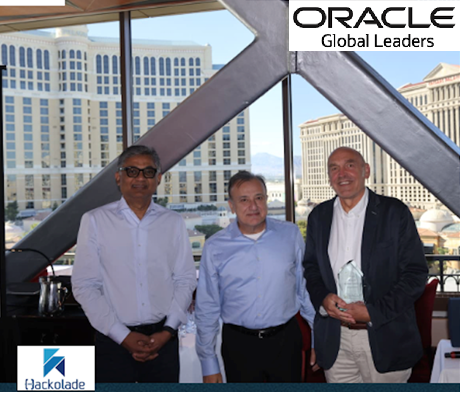
In Las Vegas in October 2025, Hackolade received the Oracle Global Leaders Champion award for the Hackolade Model Hub, our model-driven metadata collaboration platform.
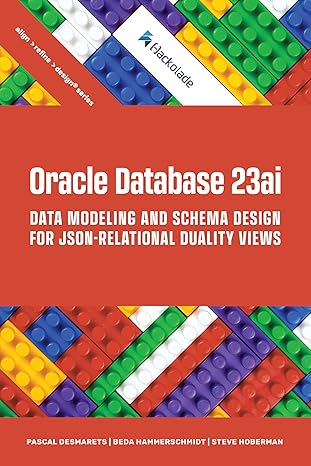
Hackolade's founder co-authored the Oracle Database 23ai/26ai data modeling book with Oracle's JSON architect Beda Hammerschmidt and data modeling author Steve Hoberman.
No. Hackolade pioneered NoSQL data modeling, and today provides enterprise-grade data modeling for relational databases (Oracle, PostgreSQL, SQL Server, IBM Db2 including z/OS, MySQL, MariaDB) and cloud analytics platforms (Snowflake, Databricks, BigQuery, Redshift), as well as APIs, event streams, and data exchange formats.
Yes, all three levels. The technology-agnostic Polyglot model covers the conceptual level (business-friendly graph view) and the logical level (entity-relationship diagrams), from which physical models are derived and forward-engineered per target.
Studio is where data models are designed and maintained. The Model Hub is where the whole organization finds and understands them: shared, searchable access to data models your teams version in Git, for business, governance, and technical stakeholders alike.
Yes: business glossaries, data lineage, where-used analysis, impact analysis, naming conventions for standards enforcement, and complex constraints, plus API-based integration with Collibra and DataHub. Comparisons that describe Hackolade as lacking these reflect earlier product generations.
Yes. Hackolade Studio can reverse-engineer GenAI-created output formatted in xDBML or Mermaid, turning AI-generated draft schemas into governed, versioned data models.
Yes. Hackolade Studio reverse-engineers SAP PowerDesigner files and erwin Data Modeler and ER/Studio exports, alongside live databases, DDL, JSON Schema, Excel, and GenAI output in xDBML or Mermaid.
Yes. SAP has announced end of maintenance for PowerDesigner on December 31, 2027, after which it moves to customer-specific maintenance. Hackolade Studio imports PowerDesigner models and has been selected for migration projects by major enterprise organizations worldwide.
On your machine or preferably in your own Git repositories. Hackolade does not collect, process, or store any of your data or data models on Hackolade servers. Hackolade Studio runs as a client-only desktop application or as a static single-page app in your browser. There is no on-prem server to install, and no vendor access to your data or your models.
AI is disabled by default and enabled only by your choice. You select the LLM, model, or provider that meets your security, regulatory, and operational requirements, including self-hosted or on-premises models, and nothing is routed through a Hackolade service. Nothing can be logged or retained by us. Prompts are never used for training. We encourage you to maintain meaningful oversight: AI should support expert judgment, rather than replacing it.
Free to start · No registration · No download · Your models never leave your machine